Has the U.S. military violated international humanitarian law in Iran? By Ryan Gozy
As the hostilities between Iran and the U.S. continue with no clear end point in sight, a tragic event which occurred early in the conflict is still of major importance. The tragic event referred to here is the February 28th, 2026 U.S. strike on the city of Minab, Iran. This strike occurred as a part of a larger attack by the U.S. and Israel, known as Operation Epic Fury, which targeted Iran’s security apparatus. During these strikes, two missiles, which were later confirmed by an internal probe from the Pentagon to be a U.S. strike, hit Shajareh Tayyebeh Elementary School, killing 165 people according to Iran state media, with the majority of victims being children ages 7 - 12.
The U.S. has claimed that the bombing was an intelligence mistake that occurred as a result of overreliance on artificial intelligence utilized by the U.S. Central Command, which misidentified the school as being part of an adjacent Iranian military compound, even though evidence points to it being repurposed as a school as early as 2017. Moreover, the Department of Defense under Pete Hegseth has made significant cuts to internal programs designed to mitigate civilian harm that occurs from U.S. military strikes, which has further limited the ability of the U.S. military to make informed attacks that minimize civilian casualties. The Pentagon has reportedly completed a full report on the tragedy, but plans to withhold its release until after midterm elections in November.
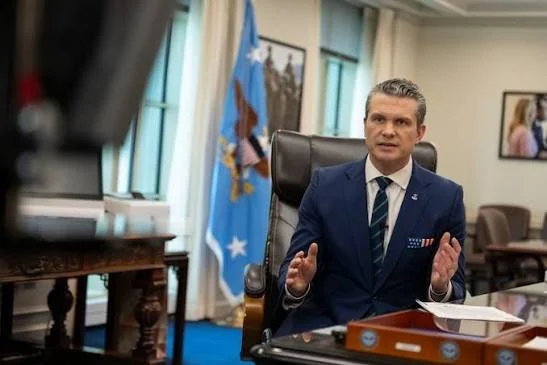
Secretary Hegseth (Photo from Dept. of War)
The United Nations, as well as human rights groups, however, share a viewpoint different from the U.S.. The Human Rights Council, which is an organ within the international organization known as the United Nations, issued a report finding that the school had been separated from the adjacent compound, with its own entrance, and satellite imagery clearly corroborated the claim, with the school having a playground, school signage, and child oriented murals. The report also found that the strike was intentional, and that the school’s destruction was not just unfortunate collateral damage. The report concluded by finding that the evidence surrounding the U.S. strike gave the Human Rights Council reasonable grounds to believe that the U.S. committed war crimes. The U.S., in response, formally left the organization a day after the report was released. Human rights groups, such as Amnesty International, have shared similar viewpoints as the Human Rights Council, and have called for U.S. accountability for what they consider to be a violation of international humanitarian law.
When evaluating whether the U.S. military violated international law or committed war crimes when they struck the Minab school, it is important to first understand what exactly the laws being referenced are. International law comes from a few main sources: customary law derived from state practices, general principles recognized by civilized nations, treaties between states, as well as judiciary decisions and writings of international lawyers.
War crimes and international humanitarian law are largely defined by the 1949 Geneva Conventions, as well as by customary practices between states, both of which can be viewed in their entirety online. As an important aside for both of these sources of international law, they each have their own limitations. States are only bound by international treaties if they ratify them, and customary law is constrained by the principle of opinio juris, which requires that not only do states follow a general practice, but that they do so because they feel as though it is required by law. As is evident by this description, customary law can be ambiguous and difficult to define.
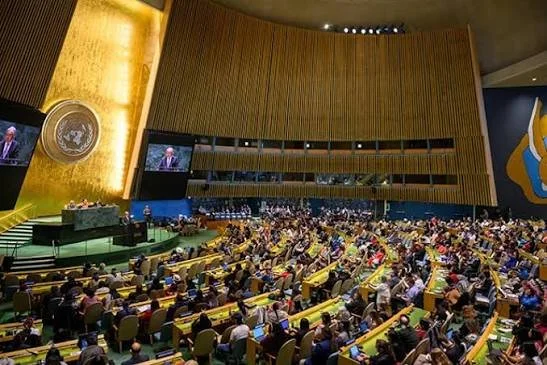
United Nations (Photo from UN)
The specific Geneva Convention to study in relation to this event is the “Geneva Convention Relative to the Protection of Civilian Persons in Time of War”, which the United States has ratified. Article 3 of this convention clearly prohibits any “violence to life and person, in particular murder of all kinds, mutilation, cruel treatment and torture” directed at people not actively a part of hostilities. Part two of this fourth convention, which is related to entire populations, offers various protections against specific acts towards civilians. This document itself, however, does not contain any specific prohibition that directly mentions bombing civilian infrastructure.
1977 Additional Protocols to the Geneva Convention, however, provide prohibitions against attacks that could be expected to lead to civilian casualties, and even specifically offer extra protections for schools that may be considered to be used for military purposes. Moreover, these protocols provide a rebuttal to a claim that a civilian strike was a mistake, by binding the attacking state to “do everything feasible to verify that the objectives to be attacked are neither civilians nor civilian objects.” Given that independent investigations have shown how clear it was that Shajareh Tayyebeh Elementary School was a school and not a part of the adjacent military compound, it would appear that the U.S. cannot avoid being in violation of international law by arguing that the strike was a result of an artificial intelligence failure. The U.S., with an over $25 Billion military intelligence budget in 2025, cannot claim they did everything feasible to ensure no civilians were harmed, when news organizations, who have much smaller budgets, were able to identify that Shajareh Tayyebeh was a school.
The U.S., however, has not ratified the 1977 protocol, meaning that they are not bound by its specific provisions, which necessitates an exploration of customary law as well. Customary law clearly prohibits attacks that are indiscriminate, citing the 1977 protocol’s definition of “indiscriminate” as support, which extends the international law to a broader context than being simply bound to the members of the 1977 protocol. The U.S. has accepted this practice, though they have argued that the prohibition only applies to civilian infrastructure that is “clearly separated” which can be interpreted to imply a sufficient distance to allow military targets to be attacked separately. While the international custom of indiscriminate attacks is certainly not in dispute, given the ambiguous nature of customary law, the U.S. may argue that its interpretation may amount to a persistent objector status, which would not bind them to the custom. This argument would not be strong, however, because historical evidence shows that the U.S. has largely accepted the prohibition of indiscriminate attacks as part of customary international humanitarian law. Therefore, it would appear that, by not taking proper steps to ensure their intelligence was accurate, the U.S. violated international customary law by bombing the Minab school.
Even if the violation of international rights exists, there is no guarantee that there will be any significant consequences for the U.S. as a result. Customary law, as well as treaty based international law, places the primary enforcement power on the state that commits the violation to punish those involved. The U.S. has specific federal legislation and directives aimed at the enforcement of international humanitarian law. Because the full probe by the Pentagon has yet to be released, it is unclear how the current administration will respond internally. Many Federal lawmakers, including Senator Elizabeth Warren and Senator Jeff Merkley, have demanded answers from the Trump administration regarding this tragedy, putting more pressure on them to respond.
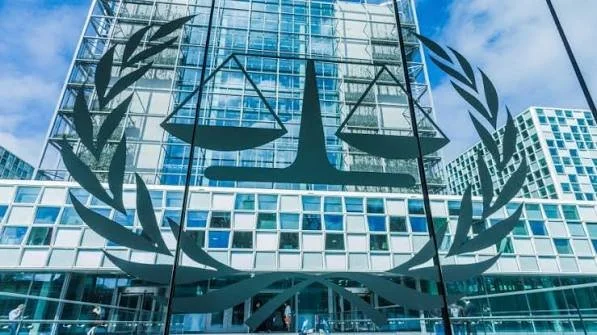
International Criminal Court (Photo from Council of Europe)
While any legal consequences directed towards military officials is a major unknown, history shows that monetary payments to Iran may be possible. Since the Korean War, the United States has been consistent with giving sympathy payments to civilians impacted by U.S. military strikes, given to many civilians in Afghanistan and Iraq. These payments would only be given after the Iran conflict reaches a formal conclusion, and they are typically framed in a way that keeps the payments from being considered an admission of guilt or reparations.
There is potential for international consequences as well, though the effectiveness of this route is severely limited due to the U.S.’ advantageous position within the United Nations. International prosecutions through the International Criminal Court (ICC) is not a feasible option, because the U.S. is not a member of the Rome Statute, which would give the court jurisdiction over military actions the U.S. commits that fall under specific categories. The United Nations Security Council could refer the case to the ICC, but because the U.S. is one of the permanent members, they would almost be guaranteed to veto the resolution and prevent it from happening. Because of this reality, any specific action by the United Nations would also be unlikely as well, because of this veto power the U.S. wields. Individual states can, however, still respond by condemning the crime and taking actions against the U.S., though whether this will occur remains to be seen. Regardless of the consequences, it is undeniable that the Shajareh Tayyebeh bombing was a great tragedy that killed many innocent people, most of whom barely got a chance to live their lives. This story must not be forgotten, and it should at the very least serve as a stark warning for states when planning military operations or using artificial intelligence for military affairs.
Ryan Gozy is a Political Science student at Utica University