
The copyright battle over AI music By Bernadette King
AI has had an impact on almost every single industry across the world. This also includes entertainment and the arts, with AI being able to generate music, visual art, novels, and other mediums of art. There is now a gap in legislation to protect the work of human artists, whose art is being used to train AI, without the artists consent.
Currently there is a class action lawsuit against Suno, an AI music generator filed by Sony Music and Universal Music Group (UMG). Between both labels they are seeking damages for over 502 songs that were scraped and fed into Suno's LLM in the original June 2024 filing.
Large language models, or LLMs, are AI models that function by having information feed into them during training. When a user requests a song or asks a question, instead of pulling an answer in a way a database like a Google search would, the LLM uses patterns found in the information fed into it to create a response or in this case a song. For example, if Daft Punk and Justice had both of their discographies fed into an LLM it would break every song apart by MIDI files which has the musical structure of a song, audio recordings which contain the acoustics of the song and sonic textures, and finally lyrics. So if a user where to ask for a French house song, with electronic drum fills, techno sample loops, and traditional pop vocals, the LLM would use the MIDI files and audio recordings of Daft Punk while pulling the lyrics from Justice who use traditional pop vocal styles in their techno music.
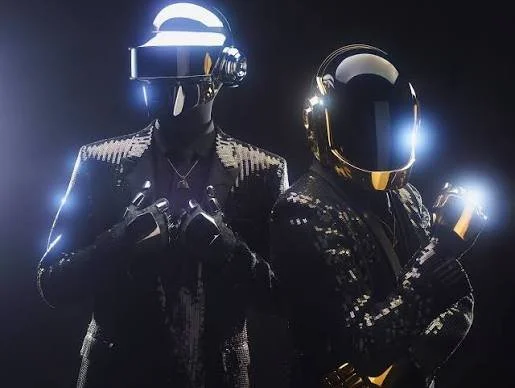
Photo from wikipedia
While Warner Music Group has settled with Suno, Sony Music and UMG are now bringing forth an additional lawsuit against the AI company. The two labels are alleging that Suno’s newly released V6 model is trained using the earlier models which were using music without the copyright holders’ permission. In this second lawsuit Sony and UMG are also claiming that over 60,202 songs were stolen by Suno. The labels also seek to amend the first lawsuit to add these 60,202 songs into the case. Currently the labels are asking for $150,000 for each song that was infringed on by Suno. The labels are also seeking $2,500 for each act of circumvention, which is the act of bypassing or avoiding a technological measure or device that protects a work under U.S. copyright law. If the labels succeed Suno could be paying over 9 billion dollars in damages to UMG and Sony Music.
Suno’s actions are being alleged to be copyright infringement. According to the U.S. Copyright Office, “...copyright infringement occurs when a copyrighted work is reproduced, distributed, performed, publicly displayed, or made into a derivative work without the permission of the copyright owner”. In Suno’s case if a user were to create a prompt asking for a Van Halen style rock song, the AI would find patterns found in the band’s music, like chord progression, lyrical themes, and vocal inflection to generate a new song that sounds exactly like Van Halen. The reason why this is infringement is because it is an unauthorized derivative of Van Halen’s music.
This case will decide if a musical artist and record labels will be able to have their works protected from being fed into AI, and how much an artist is owed if their work is infringed upon by these companies. If the court rules in favor of Sony and UMG it will be easier for artists of other mediums that were impacted by having their work infringed on by AI companies to get proper compensation for their work and to potentially have their art removed from the LLM.
Bernadette King is a Political Science student at Utica University