Birthright Citizenship, the Supreme Court, and America at 250 By Daniel Tagliarina
On the eve of the 250th Anniversary of the signing of the Declaration of Independence, the Supreme Court narrowly avoided ending the practice of birthright citizenship in the United States. The closeness of this case, on what was overwhelmingly considered a settled issue, demonstrates the deep fractures within the Supreme Court, as well as within the nation.
Birthright citizenship, or jus soli, is the practice of automatically conferring citizenship on everyone born within a country’s territory. The US is one of 33 countries that practices automatic, unrestricted birthright citizenship. Approximately 50 additional countries practice a restricted form of birthright citizenship.
At issue in Trump v. Barbara is the language of the 14th Amendment’s Citizenship Clause, as well as President Trump’s executive order that sought to limit birthright citizenship. The Citizenship Clause of the 14th Amendment states, “All persons born or naturalized in the United States, and subject to the jurisdiction thereof, are citizens of the United States and of the State wherein they reside.”
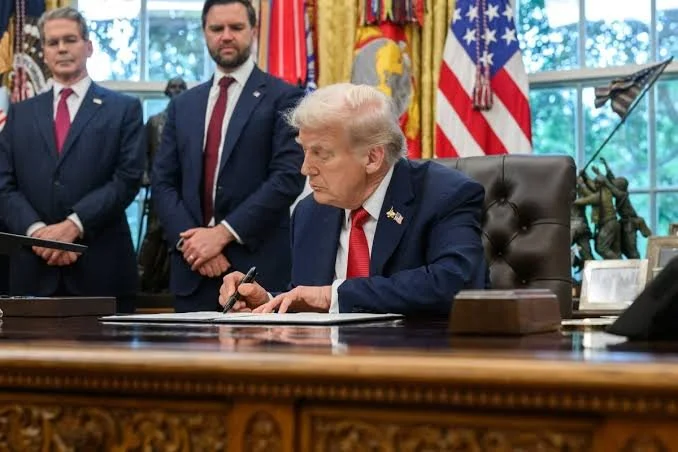
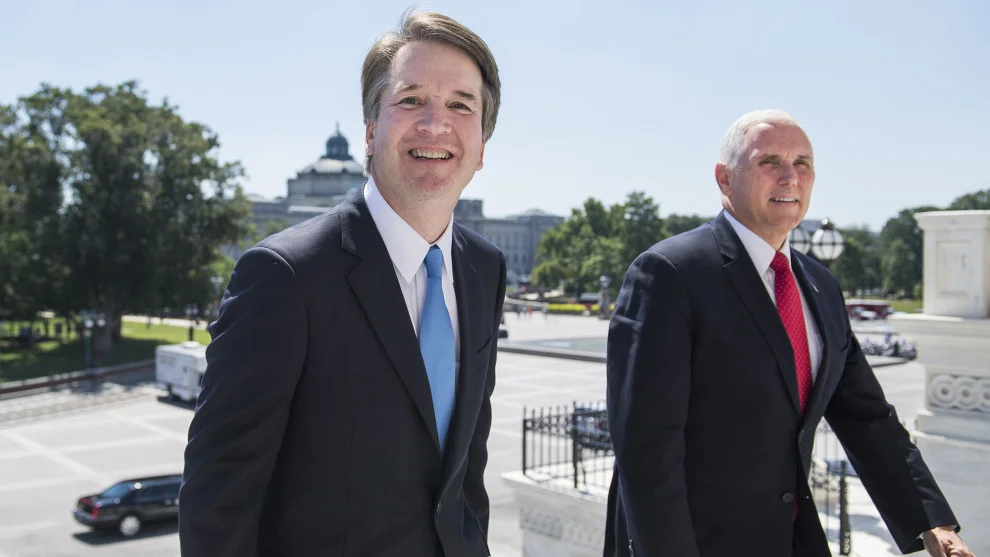
Photo from White House
On January 20, 2025, Trump signed an executive order that denies citizenship to people born in the US if their parents are not lawful permanent residents or US citizens. This executive order sought to create new categories of people who would be denied birthright citizenship. This order was challenged in court, and gave rise to the case Trump v. Barbara.
In Trump v. Barbara, six justices ruled that Trump’s executive order seeking to curtail birthright citizenship was improper. Five of those justices (Chief Justice Roberts, and Justices Sotomayor, Kagan, Barret, and Jackson) found the executive order to violate the 14th Amendment’s citizenship clause, while the other justice (Justice Kavanaugh) found the executive order merely violated the Immigration and Nationality Act, but not the 14th Amendment. The three dissenting justices (Justices Thomas, Alito, and Gorsuch) all argued that birthright citizenship is not protected by the 14th Amendment.
The majority opinion, written by Chief Justice Roberts, argued that birthright citizenship was enshrined in US law longer than the US, itself, existed. Roberts argued that the US adopted and implemented the British common law practice of birthright citizenship. This was generally accepted and practiced throughout the United State. The practice was initially challenged in the late antebellum period, as southern states sought to prevent free Black people from gaining US citizenship. While the denial of birthright citizenship to free Black people was acknowledged by its advocates as contravening existing common law practices, Chief Justice Taney ultimately embraced this position in the infamous Dred Scott ruling.
The lead up to the Civil War saw constant attacks on Dred Scott and the breaking of the common law. During the Civil War, Lincoln’s Attorney General Edward Bates took steps to clarify that the US, in fact, does still acknowledge and practice birthright citizenship. This was again enshrined in law by Congress in the Civil Rights Act of 1866, and then in the Constitution with the ratification of the 14th Amendment in 1868.
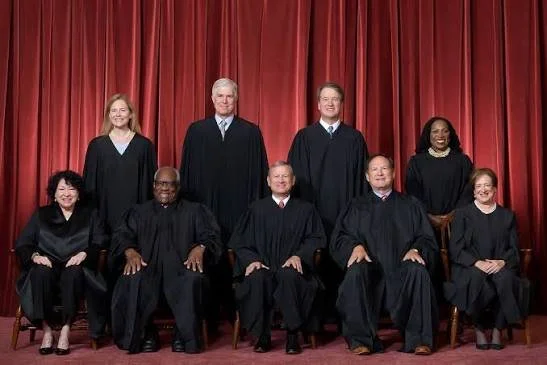
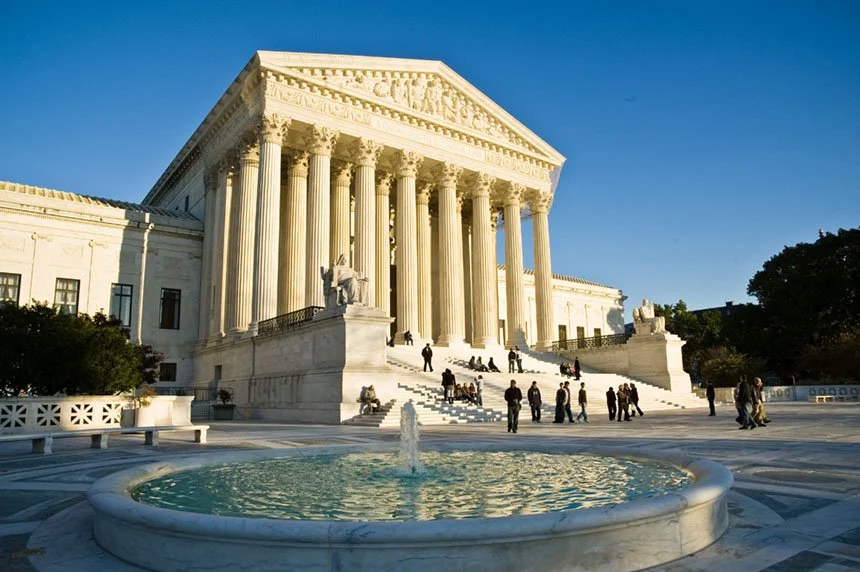
Photo from Supreme Court
Roberts and the Court’s majority used this history, as well as subsequent legal developments, including the Court’s ruling in Wong Kim Ark, and the Immigration and National Acts of 1940 and 1952 to find that President Trump’s executive order violated the Citizenship Clause of the 14th Amendment.
Justice Kavanaugh argued that the executive order merely violated the Immigration and Nationality Act, but not the 14th Amendment. While siding with the majority, he did not sign on to Roberts’s opinion. Instead, Kavanaugh laid out a path by which Congress could add further restrictions to birthright citizenship. According to Kavanauh, all Congress needs to do is amend the Immigration and Nationality Act.
Justice Thomas, joined by Justice Gorsuch, wrote a 91-page dissent. Thomas argued that the Citizenship Clause does not confer birthright citizenship, because the 14th Amendment was intended as a narrow race-based remedy to Dred Scott, and not much beyond that. Thomas also argues that citizenship requires “domicile,” which for him means lawful permanent status. He argues this, despite no mention of residency or use of the word “domicile” in the text of the Citizenship Clause.
Justice Alito also dissented. Alito argued that the Citizenship Clause only applies to “children who, at birth, owe allegiance solely to this country.” For Alito, the language “subject to the jurisdiction therefore” in the Citizenship Clause is tantamount to allegiance. He seeks to link citizenship to not being a subject to any other foreign power, which is a far narrower application of citizenship than the language of the 14th Amendment suggests, as well as is an interpretation that would have grave implications for anyone with dual nationalities.
The closeness of this case is at odds with anywhere from 180 to 417 years of practice within what is today the United States. This closeness reflects not only a Court that is increasingly flirting with what have historically been fringe legal theories, but also a nation fighting with its own identity. This case, in many ways, is a fight over the full meaning and intent of the 14th Amendment and the entire project of Reconstruction.
As one of the Reconstruction Amendments, the 14th Amendment is intentionally broad in scope. The language and protections of the 14th Amendment reflect a turning point where the Constitution seeks to curtail not just the national government, but the states as well, in ways that had not been the norm before that point. The 14th Amendment is born out of the horrors of slavery and the Civil War. The 14th Amendment, and Reconstruction more broadly, reflects a nation seeking to correct its errors and rededicate itself to the proposition that all people are created equal and have inalienable rights, which must include life, liberty, and the pursuit of happiness, as well as the equal protection of the laws.
The fact that four of the current nine justices on the Supreme Court are actively trying to rewrite this history and the 14th Amendment is nothing short of radical. The United States has always done a better job of stating our principles and values than living up to them. But this is also the American project, to work towards a more perfect union and to better uphold the ideals we embraced at our founding. The Supreme Court, narrowly, is continuing this work with their ruling on birthright citizenship. However, the narrowness of the Court’s vote demonstrates that the path to recommitting ourselves at our 250th celebration is fraught with a perilous choice: do we recommit ourselves to the pursuit of the ideals we proclaimed at our founding, or do we recommit ourselves to embracing historical practices that have fallen short of those ideals. The Court narrowly chose the former. It is time for the rest of the country to make its choice as well.
Dan Tagliarina is Professor of Political Science at Utica University