Is North Korea America's next military target after Iran? By JT Kwon and Ryan Gozy
As the conflict with Iran appears to be stabilizing, speculation has emerged regarding potential future targets of U.S. military action: could North Korea be next? Like Iran, North Korea is an authoritarian regime, deeply hostile to Washington and committed to developing nuclear capabilities. In policy debates and media commentary, analogies between Iran and North Korea often emerge to anticipate future U.S. strategy.
The comparison is superficially appealing but is fundamentally flawed. This surface-level analogy obscures deeper structural differences between Iran and North Korea. While President Trump’s aggressive and bold military strategies make this option worth considering, military action against North Korea is not a viable option. The structural reality of the Korean Peninsula renders military strikes extraordinarily risky with unacceptably high costs. Five factors, in particular, make this case clear.
Dept of Energy
1. Nuclear Deterrence
The most significant reason the United States should avoid military action against North Korea is its possession of nuclear weapons. Unlike Iran, which remains a threshold nuclear state, North Korea’s nuclear capabilities fundamentally alter the strategic environment by introducing the possibility of retaliation. As North Korea is widely believed to possess dozens of nuclear warheads and an expanding range of delivery systems, the risk of nuclear retaliation could extended to U.S. territories in Asia, its allies, and even the U.S. mainland.
From a deterrence perspective, even a small probability of nuclear retaliation imposes unacceptable risks. Any military strike would carry the potential for rapid escalation into a nuclear conflict, eliminating the possibility of a controlled or limited engagement as might be assumed in the case of Iran. For U.S. policymakers, this creates a clear constraint: military action against a nuclear-armed North Korea is not a viable or responsible policy option. The expected costs far outweigh any potential political and strategic gains.
2. Alliance Dynamics: China and Russia
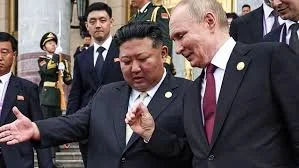
North Korea’s ties to China and Russia create the danger of great-power escalation. Any conflict on the Korean Peninsula would unfold in the shadow of great power politics. China has long viewed stability on the Korean Peninsula as a core strategic interest, while Russia has recently strengthened its relationship with Pyongyang.
While Iran has diplomatic relations and strategic partnerships with both Russia and China, their relationships are not as deeply institutionalized as those with North Korea. Both Russia and China maintain formal commitments in the treaty of military alliances to North Korea’s security and possess significant military capabilities, including nuclear weapons. These relationships may not guarantee direct military intervention, but a U.S. strike would likely provoke diplomatic, economic or even military responses from one or both powers. It will transform a regional crisis into a broader conflict among nuclear-armed states. The U.S. would not simply be confronting North Korea; it would be operating within a much more dangerous great-power confrontation.
BBC
3. The South Korea Factor: There is No South Iran
Due to geographic proximity, South Korea would likely be the primary target of North Korean retaliation in the event of conflict. This includes both conventional artillery strikes and potential nuclear escalation. This geographic reality imposes a profound strategic constraint as South Korea is firmly opposed to a U.S. military option against North Korea.
Unlike the case of Iran where key regional actors such as Israel and Saudi Arabia have supported the U.S. military action, South Korea has consistently opposed the use of force against North Korea. Since President Lee Jae-myung was sworn in last June, South Korea has made sustained and deliberate efforts to advance inter-Korean reconciliation and détente.
Historical precedent reinforces this point. During the 1994 North Korea nuclear crisis, the Clinton administration considered military strikes on North Korean nuclear facilities. However, strong opposition from South Korea played a critical role in constraining U.S. military options. This episode presents a still-relevant and persistent structural reality: the United States cannot credibly pursue military action on the Korean Peninsula without the consent of South Korea, a crucial ally in East Asia.
4. Juche: pathological nationalism
There is also a persistent myth in U.S. policy circles that military pressure could precipitate the collapse of the North Korean regime. This assumption, however, has little empirical foundation. The Iran case underscores its flaws. President Donald Trump did not conceal that regime change was among the motivations behind U.S. military strikes on Iran.
The underlying logic appeared straightforward: by weakening Iran’s leadership through military action, foreign intervention creates a political opportunity for domestic opposition forces to mobilize resources and ultimately to challenge the regime. Yet this expectation has not materialized in Iran. External military pressure has not translated into meaningful internal political change or regime collapse. If anything, such pressure often reinforces regime cohesion by enabling leaders to rally nationalist sentiment and suppress dissent more effectively.
The implications for North Korea are even more sobering. The durability of the North Korean regime cannot be understood without reference to its deeply entrenched and state-engineered nationalism. This form of pathological nationalism has served as a powerful source of internal stability. Central to this dynamic is the ideology of Juche, which not only emphasizes self-reliance but also reinforces the regime’s legitimacy and cohesion. Under Juche, loyalty to the state is inseparable from loyalty to the Kim family, producing a system that in many respects resembles a theocracy. The leadership is not merely political but is elevated to an almost sacred status, making dissent both politically and morally unthinkable for most citizens.

USDA
5. No Oil in North Korea
North Korea does not present the same economic incentives that may have influenced U.S. actions in other contexts. Economic factors clearly differentiate North Korea from Iran. In cases such as Venezuela and Iran, access to oil has been cited as a potential motivating factor behind U.S. actions. North Korea, by contrast, lacks comparable strategic resources. As a result, the material incentives for intervention are considerably weaker. This absence of economic benefit further weakens the rationale for military action. Without clear material gains, intervention would impose high costs with limited tangible returns.
If military options are neither feasible nor desirable, the question becomes: what should U.S. policy be?
The answer remains dialogue and diplomacy. One point is clear: North Korea has not fully closed the door to engagement with the United States. Should Washington move away from its stubborn adherence to complete, verifiable, and irreversible denuclearization (CVID) and lower its political expectations, the likelihood of renewed negotiations would improve. If the United States wishes to successfully reach an agreement with North Korea, it has to pursue the denuclearization of North Korea through step-by-step diplomacy where North Korea would disarm and denuclearize bit by bit in exchange for the gradual lifting of sanctions and security guarantees.
North Korea presents one of the most complex challenges in international security. Its nuclear capabilities, strategic dynamics, and internal cohesion make it resistant to both coercion and transformation. However, North Korea is not Iran. Treating it as such risks a dangerous miscalculation—one that surely has unbearable consequences far beyond the Korean Peninsula.
JT Kwon is Associate Professor of Political Science at Utica University. Ryan Gozy is a Political Science major at Utica University.