What the Supreme Court’s ruling on geofencing means for American’s privacy and data By Daniel Tagliarina & Francesca King
The end of June is often a busy time for the Supreme Court, as this is when they end their term and often release some of the most impactful decisions of the term. These decisions directly affect the lives of American Citizens. One such decision was Chatrie v. United States, which delves into whether law enforcement can reasonably access that information through a warrant, and if an individual owns the data they produce through cell phone and internet use.
The case starts in 2019 with a bank robbery in Virginia. The police, unable to find the robber, reached out to Google through a geofencing warrant to find the suspect who appeared to have been on their phone at the time of the robbery. A geofence creates a perimeter where all phone locations can be accessed through a warrant. Google complied with the warrant in three rounds. In the first round, they provided law enforcement with Google accounts that were accessed in the perimeter. Next, they provided more information about select accounts of which the police were suspicious. Lastly, Google provided names and personal information about three accounts the police identified, which included the defendant, Okello Chatrie. Chatrie challenged his conviction based on the inclusion of the evidence obtained through the geofence warrant, claiming that it is a violation of the Fourth Amendment. The Fourth Circuit Court of Appeals upheld Chatrie’s conviction.
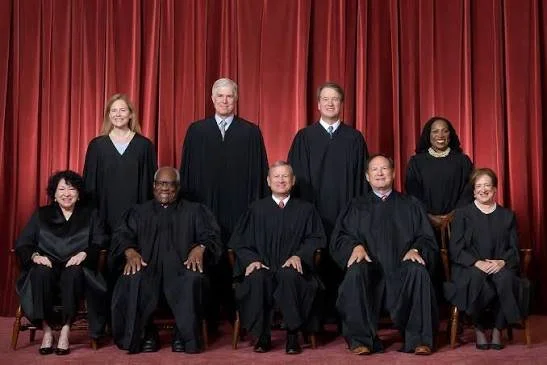
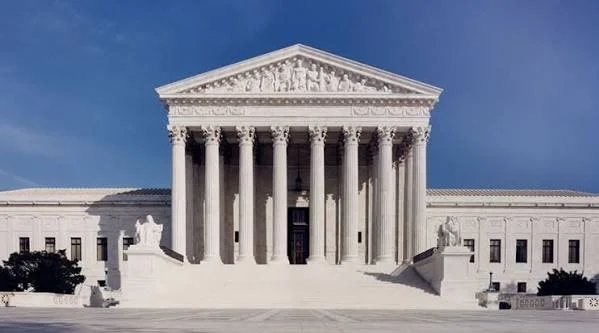
Photo from Supreme Court
Writing for the Court, Justice Kagan, joined by Chief Justice Roberts, and Justices Sotomayor, Kavanaugh, and Jackson, found that the police accessing location history data through Google constitutes a “search” under the Fourth Amendment. For Kagan and the majority, there is a reasonable expectation of privacy regarding our location data. This reasonable expectation means that accessing this data counts as a search under the Fourth Amendment.
Kagan also argues that because Google constantly prompts users to turn locations on, and warns them their phones will not work properly if they turn off location-based features, it is inappropriate to treat opting in to Location History as being the same as giving up control over your own information. The Fourth Amendment is about privacy and security of individuals from “arbitrary invasions by government officials.” This means that sensitive data must be protected, and accessing it counts as a search.
Importantly, what the majority does not rule on in this case is the appropriateness of the search. That is, the Fourth Amendment protects us from “unreasonable search and seizure,” and the Court is not saying if this search is or is not reasonable. The Court sent the case back to the Fourth Circuit for the lower court to consider if the search was reasonable, and other questions related to the warrant used in this case.
Justice Jackson, joined by Justice Sotomayor authored an additional concurring opinion. Jackson states that she agrees a search happened. However, she writes separately to say she also would have ruled that the search in this case was unconstitutional under the Fourth Amendment. Jackson finds that the warrant process used in this case was inconsistent with what is required by the Fourth Amendment.
Justice Gorsuch concurred in the judgment. This means he agrees with the majority that a search happened under the Fourth Amendment, but he has completely different reasoning for reaching the same conclusion. Gorsuch does not like the “reasonable expectation of privacy” test for figuring out if a search happened. Gorsuch does not see the question of a search as related to privacy. Rather, he argues that Location History data counts as “papers or effects” under the Fourth Amendment. Gorsuch says we own our information akin to other personal property. As our property, any access of that data to try to learn something counts as a search under the Fourth Amendment.
Justice Alito, joined in part by both Justices Thomas and Barrett, dissents. Alito argues that because Chatrie opted in to Google Location History, he has effectively turned over his information to Google. According to Alito, Chatrie does not own his location data, and Google may turn it over without it counting as a search under the Fourth Amendment. What’s more, Alito argues that even if a search did happen, the information would be admissible under the “good faith exception.” When acting pursuing to a search warrant, if officers had a “reasonable, good faith belief” that they were lawfully executing a warrant, the evidence obtained may be used in court, even if there are legal problems with the warrant. Thus, for Alito, the Court erred both in finding that a search happened and in not addressing the fact that the location data in this case would still be admissible in court.

Photo from DHS
The importance of this case for Americans lies in the fact that the Supreme Court has ruled that whenever law enforcement access information through geofencing it is a search under the Fourth Amendment. Even when the data is held by a third party, it contains sensitive personal information and thus is protected from unreasonable searches and seizures.
While the majority does not discuss full ownership of this data, Gorsuch’s opinion concurring in the judgment makes a strong claim that individuals own their private data, regardless of where it is stored. Affirming personal property rights to data is potentially huge for privacy protections, both from governmental overreach, but also from how third parties use other people’s private data. This claim, however, is challenged by Alito in dissent. Per Alito’s opinion, we do not own our private data, which allows both companies and the government to do almost whatever they want with it. While these issues are not fully settled, which interpretation the Court adopts will have drastic effects on privacy in the United States.
Another important implication for Americans can be seen in the shift of where personal information is stored. In 2023, Google updated their location tracking history to be privately stored on the device rather than stored in the cloud. More recently, in May of this year, Google announced that they will also be utilizing RCS encryption on messages. These changes reflect the ruling in that this information requires a warrant and is protected by unreasonable searches under the Fourth Amendment. This also coincides with Justice Gorsuch’s opinion that citizens own the data generated through phone usage, no matter who holds the data.
With the issue of the reasonableness of the search still open, the full importance of this case cannot be known. If the Court rules that the search was reasonable, or the information was admissible under the good faith exception, as Alito argues, the ultimate importance of this case might be limited. If, however, as Jackson argues, the search is deemed to have been unreasonable, this case will help to protect privacy and individual data, and require a higher threshold for the police to access potentially sensitive information.
Dr. Daniel Tagliarina is Professor of Political Science at Utica University. Francesca King is a Political Science student at Utica University.