
An American Fulbrighter in Budapest: First Impressions By Luke Perry
I was awarded a Fulbright Scholarship, the Országh László Distinguished Chair in American Studies. I arrived in Budapest on September 1st and am staying in the city center, near Deák Ferenc. Budapest is a combination of two parts, Buda and Pest. I will be teaching at Pázmány Péter Catholic University in Buda and at Eötvös Loránd University in Pest.
The Hungarian Fulbright Commission organized an intensive four-day orientation that included lessons on Hungarian language, history, politics, economics, and music, and excursions to different parts of the city and surrounding area. This comprised my first week.
I learned a lot and have begun immersing myself in Hungarian culture and exploring the city. Below are some initial impressions. These solely reflect my views as someone having this unique and fortunate to uniquely experience Budapest for the first time.
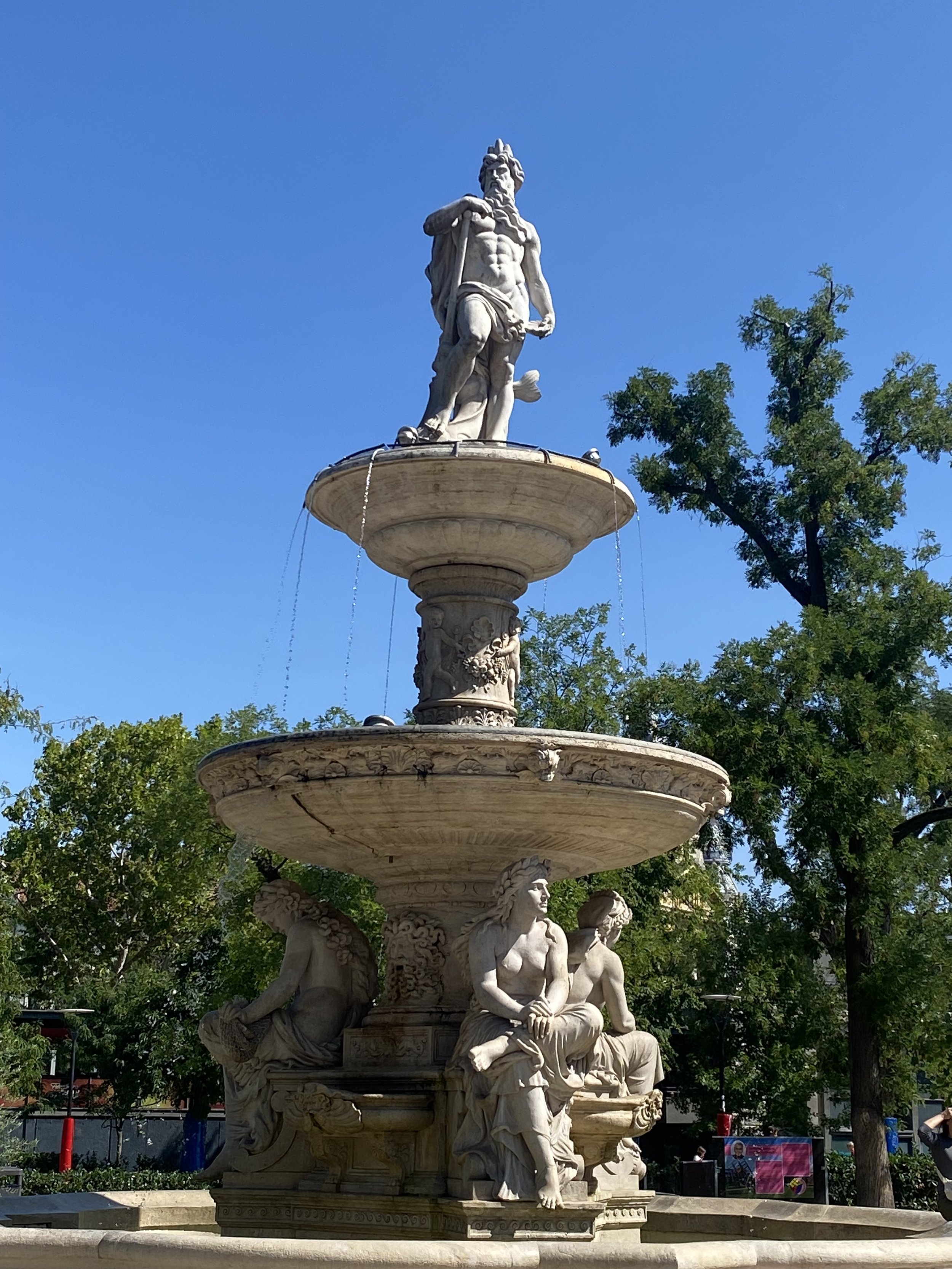
Photo by Luke Perry
Magyar (Hungary) is full of emotion. Its distinct language echoes through their folk music and dancing that by design brings people together. It was said the whole country is wine country outside of Budapest. This is a city that named its airport after a classical composer.

Photo by Luke Perry
The late summer sun fills the windows earlier than I’m ready to wake but the view never disappoints as the cool morning air floods my apartment. A place that makes you want to say “yes” to everything you think of doing and is engineered to help you do it. You can stand and stare at the boats and buildings along the Danube River or traverse bridges and climb to new to heights in the hills that flank it.
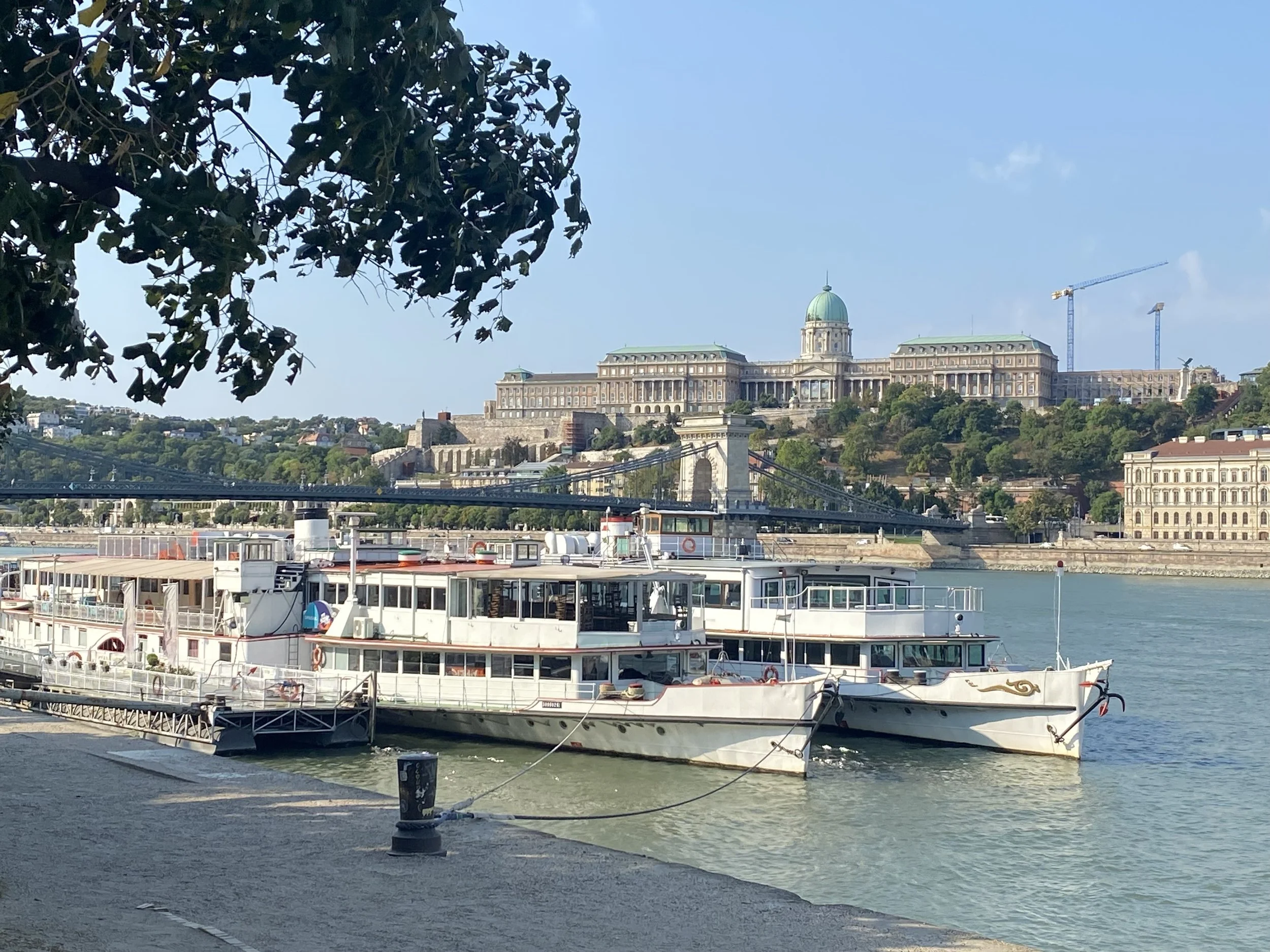
Photo by Luke Perry
Yet there is a sadness underneath, born from centuries of suffering. A nomadic people from the Ural mountains who settled a thousand years ago in an effort to be more secure and were subsequently invaded for centuries. Mongols, Turks, Hapsburgs, Russians, Nazis, Soviets; stb., stb. (pronounced “shutter-bee, shutter-bee”), as my Hungarian language professor would say, meaning “etc., etc.”
The namesake saint of Gellért Hill, who is seen today via a giant statue, was thrown down it, becoming a Christian martyr. In1526 the entire Hungarian army was annihilated. In 1956 thousands of student-inspired anti-Communist revolutionaries perished. Their national hero is a revolutionary poet who died on the battlefield.
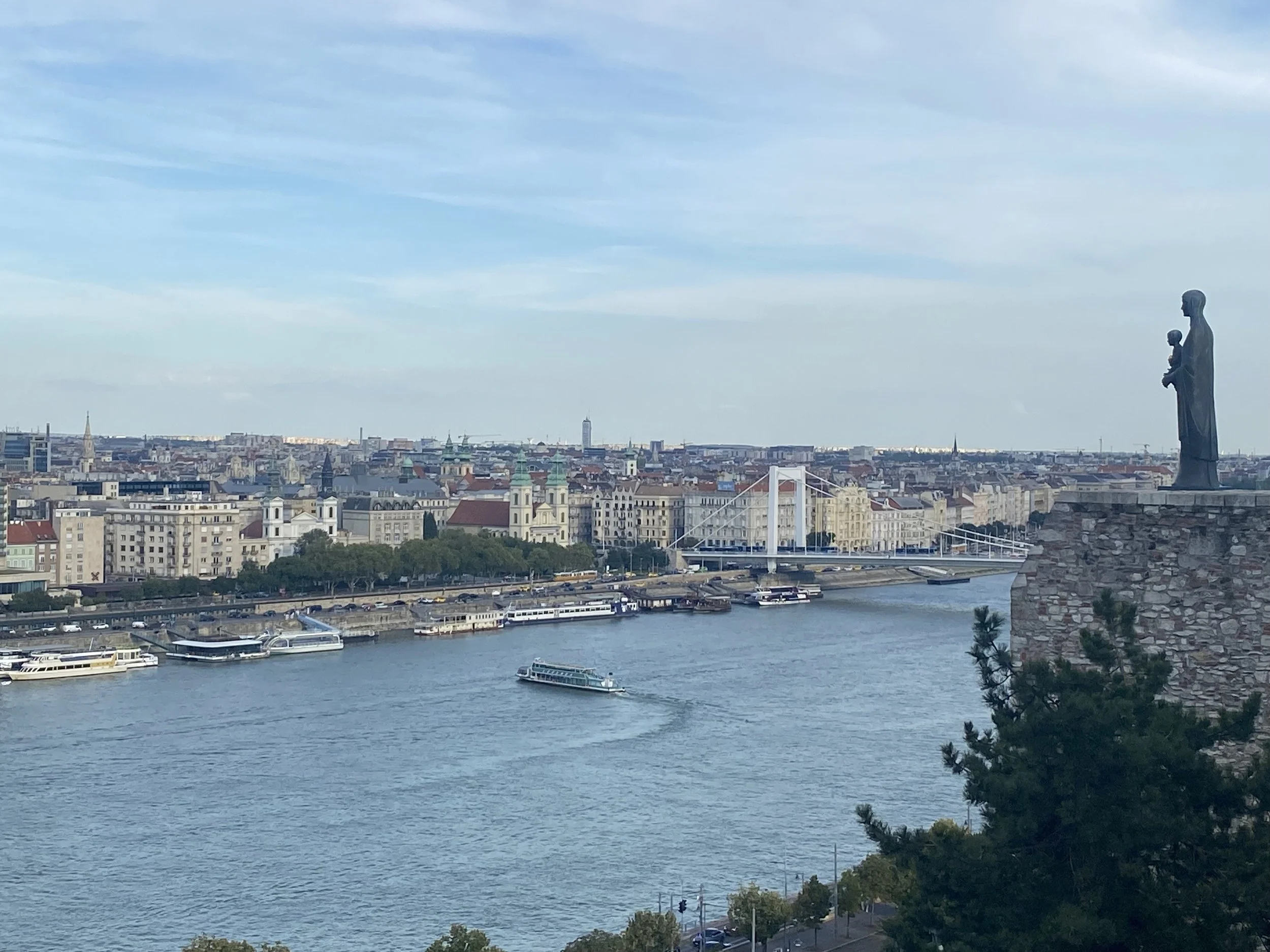
Photo by Luke Perry
My professor did much more than trying to convince a bunch of “accomplished” and quickly humbled academics that Hungarian is not hard to learn by making us speak without knowing what we were saying. She sprinkled in quips about culture amidst instruction on a language that is more like Finnish than any of its neighbors.
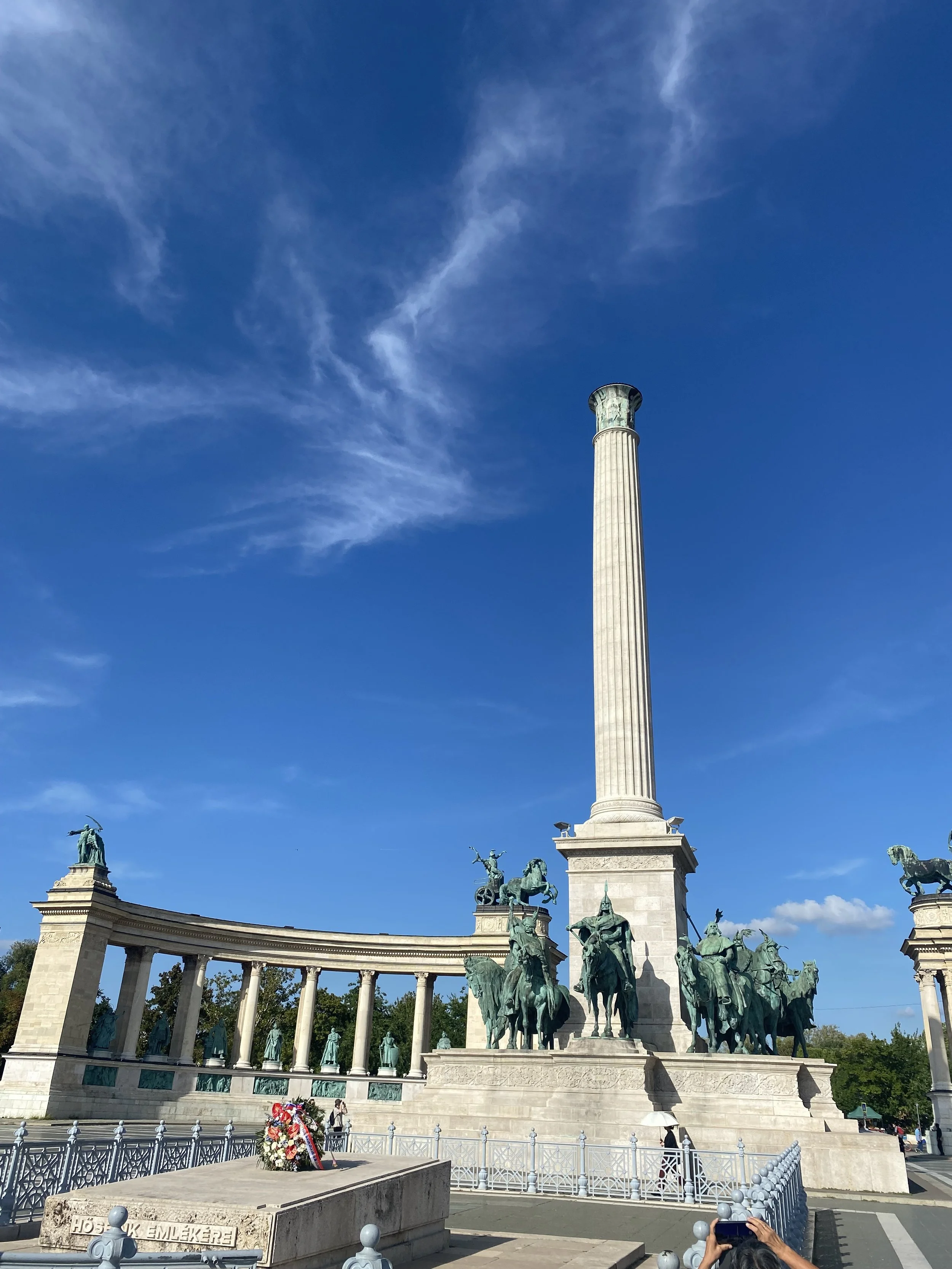
Photo by Luke Perry
“History is very important to Hungarians. We have one important talent. The will to survive.” She added these wisdoms casually, with a smile, with the demeanor of a nurse kindly chatting you up before poking you in the arm with a needle. “Life is not easy. Life is suffering. But it is adventurous.”
This message can be seen in the Shoes on the Danube commemorating where Jews were shot by the Nazis and thrown in the river. And more whimsical legends, like the one on display in Matthis Fountain at Buda Castle. King Matthis is adorned in hunting gear, while staying in the country with a young woman who fell in love with him, not knowing he was royalty. That is, until Matthis left, and left behind gold coins that pictured him wearing the crown, never to return.
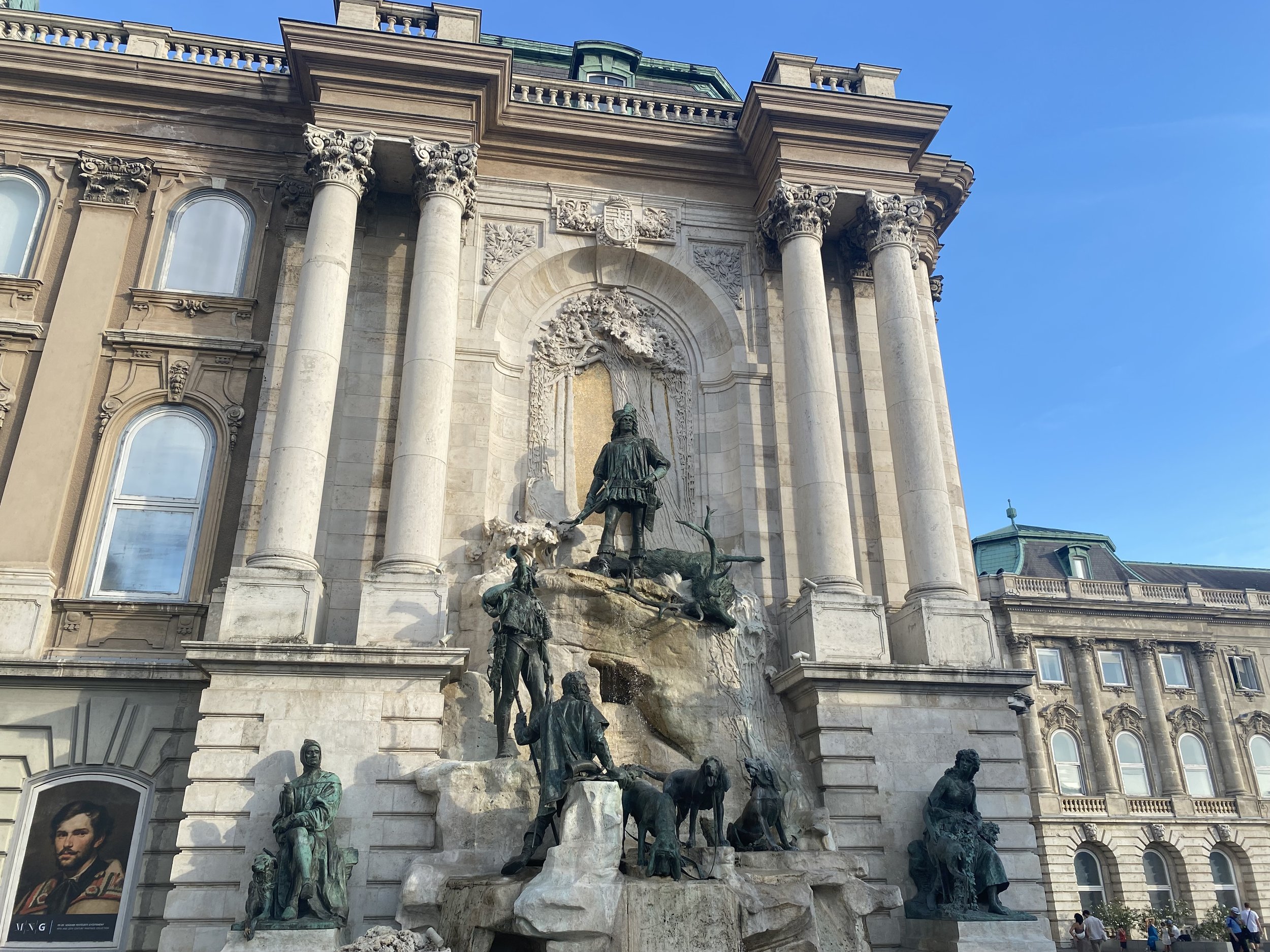
Photo by Luke Perry
But our fiercely engaging history professor taught us that Hungary is a country of inventors as well as invaders. From the necessary (Vitamin C) to omnipresent (computers, ballpoint pen) to the confounding (Rubix Cube), this small country- her words, not mine -is alive and relevant. Thought of today by many Americans for political challenges, not wholly dissimilar to ours, she observed that Hungary is a lot more independent today than ever before. “Hungarians do not want to lose this independence.”

Picture by Luke Perry
Unlike America, there were many revolutions, not one. Most fell to greater force. The current moment is younger than Antal Szerb, their most prominent writer, who was just 43 when he died in a Nazi labor camp. The ghosts of who perished lurk in the corners of their grand historic buildings (Dohány Street Synagogue, St. Stephen’s Basilica, Parliament) to the pavement of Hero’s Square and every shadow made by this city of plentiful trees.
Photo by Luke Perry
They whisper on modern shoulders, “Be happy, but not too happy. Be content, but not too content. Hungary will be tested again.” To which, I heard Magyars reply “You clearly and valiantly did the right thing in fighting evil and our destruction.” Through the words, I gathered in their tone, they whisper back: “We love you. You did not die in vain. Our people live on.”
Luke Perry is Distinguished Professor of Political Science at Utica University