Russia's Pearl Harbor By James Bruno
Moscow's targeting of civilians is self-defeating. It is the non-quantifiable psychological factor that will be key to how this conflict ends and who wins.
Early in the morning of Sunday December 7, 1941, my great uncle Augie decided to catch early morning mass onshore at Pearl Harbor. Whether his decision was divinely inspired or mere luck, it saved his life. At 0755, the Japanese struck, sinking or disabling 21 ships, destroying 188 aircraft and killing 2,403 American personnel. Journalist and author of the book, The Greatest Generation, Tom Brokaw said, “Pearl Harbor holds a special place in our collective memory because it redefined the role of America in the world. It brought us together and set the United States on a course that would make it a superpower. It redefined the American spirit for the modern age.”
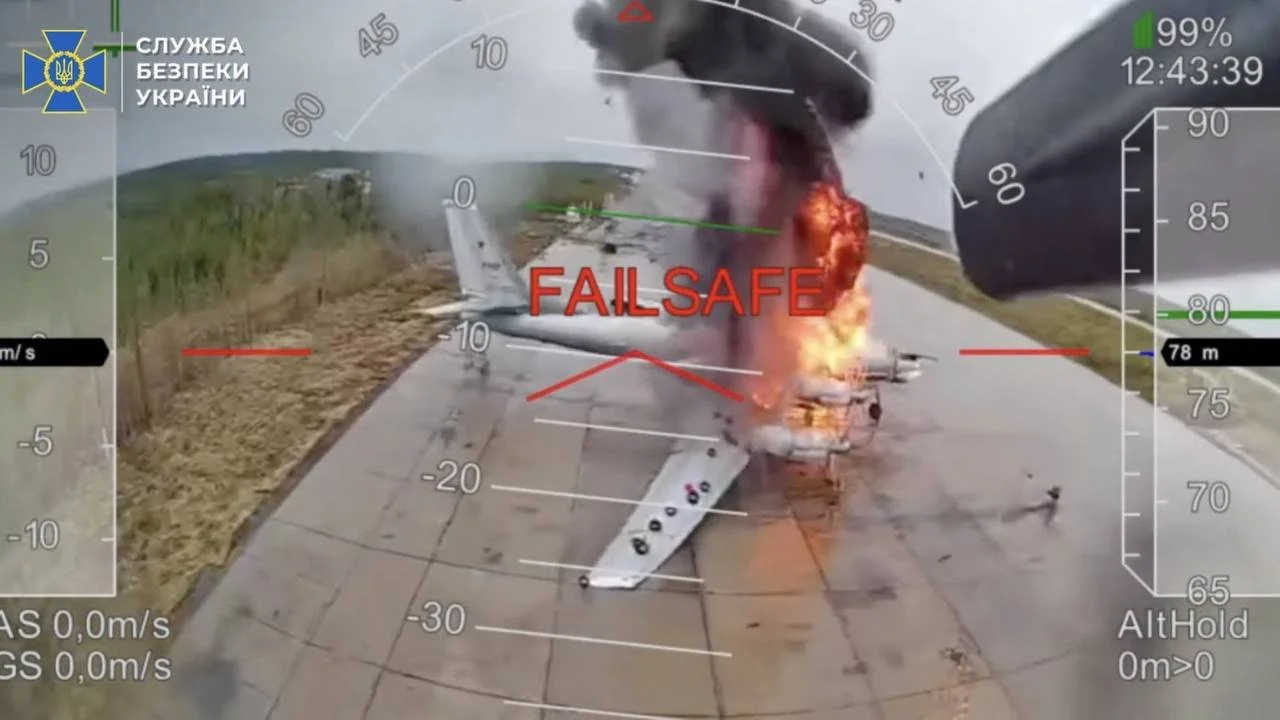
The same cannot be said of Russia, which on June 1, 2025 suffered its own Pearl Harbor when, in an ingenious, meticulously planned operation, code-named “Operation Spider Web,” Ukraine took out of action a third of Russia’s strategic air fleet using inexpensive drones. According to the Institute for the Study of Warfare (ISW), the surprise strike neutralized at least 40 aircraft, destroying 10 to 13, including long range nuclear capable bombers. The losses are estimated at $7 billion. Russian military bloggers are calling it “Russia’s Pearl Harbor.” Military Watch Magazine assesses that the attack resulted in the “destruction of approximately 8-9 percent of the Russian intercontinental range bomber fleet. This is a particularly significant achievement considering that the Russian fleet is the second largest in the world.” Russia lacks the industrial base to quickly replenish such losses.
The main benefit to Ukraine of their op is that Russia had used the destroyed aircraft to launch over 3,000 cruise missiles that have struck critical infrastructure and civilian targets in Ukraine since February 2022, according to a NATO official. This will surely put a dent in Moscow’s strike capability, though the Russians have an estimated stockpile of over 13,000 ballistic, cruise and other missiles to deploy, according to ISW.
According to a United Nations human rights report, as of the third anniversary of Russia’s invasion, 12,654 Ukrainian civilians were killed, including 673 children, and 29,392 more were injured. Moreover, Russia’s aerial attacks have destroyed 80 percent of Ukraine’s energy infrastructure, and damaged or destroyed at least 1,300 healthcare facilities, 3,800 educational institutions, and 250,000 buildings housing some 3.4 million civilians. Over 600 churches have been intentionally targeted and destroyed.
Attacking civilian targets is deliberate as part of the Kremlin’s effort to break Ukrainian resolve.
But it won’t work.
History has proven two things: 1) wars are won based on, as Clausewitz asserts, “the destruction of [the enemy’s] forces,” not on “blind aggressiveness,” which will “destroy the attack itself, not the defense;” and 2) committing atrocities only enhances the zeal of an enemy’s will to resist.

Photo from wikipedia
Following Putin’s retaliatory air attacks this week in response to Operation Spider Web, a Kiev female resident told CNN, “It didn’t break us at all. The morale is as high as it was. We strongly believe in our armed forces. . . it doesn’t change our attitude towards the enemy or towards our country.”
This resilient morale was borne out in World War II. While the Allied “strategic bombing” of civilians helped eventually to undermine the will of the German and Japanese to prosecute the war, for most of the conflict it only stiffened their resolve to fight on. It was only when their countries lay ruins that morale irreversibly flagged. As for the British, the German Blitz on cities, killing 30,000 civilians, only stiffened popular resolve.
There is a whole body of law devoted to the rules of armed conflict called International Humanitarian Law, centered in the Geneva Conventions of 1949. They specifically protect noncombatants, notably civilians, health and aid workers, and specify that civilian hospitals “may in no circumstances be the object of attack. . . .” Russia is a signatory of the Geneva Conventions.
Russian tactics and strategy in Ukraine — such as they are — reflect stupidity and ultimate self-defeat. The evidence includes a dozen Russian generals killed in action, the sinking of the prize ship of Moscow’s Black Sea fleet, the chaos in logistics, the massive losses of men (now approaching 1 million, a quarter of whom are KIA), tanks and armored vehicles and the simple failure to achieve intended territorial gains much less regime change. Russia loses more men per square kilometer gained than occurred in the bloodiest battles in World Wars I and II, according the Center for Strategic and International Studies (CSIS). “Russia has suffered roughly five times as many fatalities in Ukraine as in all Russian and Soviet wars combined between the end of World War II and the start of the full-scale invasion in February 2022,” reports CSIS.
These are losses Russia can ill afford. Experts deem the country to be in “demographic free fall.” The Atlantic magazine reports that
Russians may have had fewer children from January to March 2025 than in any three-month period over the past 200 years. As of 2023, the country’s fertility rate — 1.4 births per woman — lies well below replacement level and amounts to a roughly 20 percent drop compared with 2015. In some regions, births fell that much in just 12 months. Last year, deaths outpaced births by more than half a million.
Add to this an estimated million young men who have fled the country to escape the military draft.
The Russian economy continues to face pressures. Three years into the war, Russia faces a severe labor shortage, inflation hovers near 10 percent and food prices are rising, while gasoline, housing, and utilities costs have soared. The Central Bank has set the interest rate at 20 percent. The IMF projects Russia’s GDP will grow by only 1.4 percent this year and 1.2 percent next year. Meanwhile 8 percent of GDP goes to military spending. The price of oil, Russia’s chief export, has been depressed and could go lower.
It is the non-quantifiable psychological factor, however, that may prove to be key to how this conflict ends and who wins.
When he launched his “special military operation” against Ukraine in February 2022, Putin was convinced he would have victory in three days. Many Russian soldiers were issued parade uniforms to be worn when they marched victoriously through central Kiev. He, of course, has been proven wrong time and again, from stiff Ukrainian resistance, to being chased out of occupied northern territories, to the sinking of Russia’s flag ship Moskva, to the Ukrainians chasing Russia’s Black Sea fleet to the margins, to a dozen generals being killed, to Operation Spider Web’s trashing a third of Russia’s strategic air force.

Photo from wikipedia
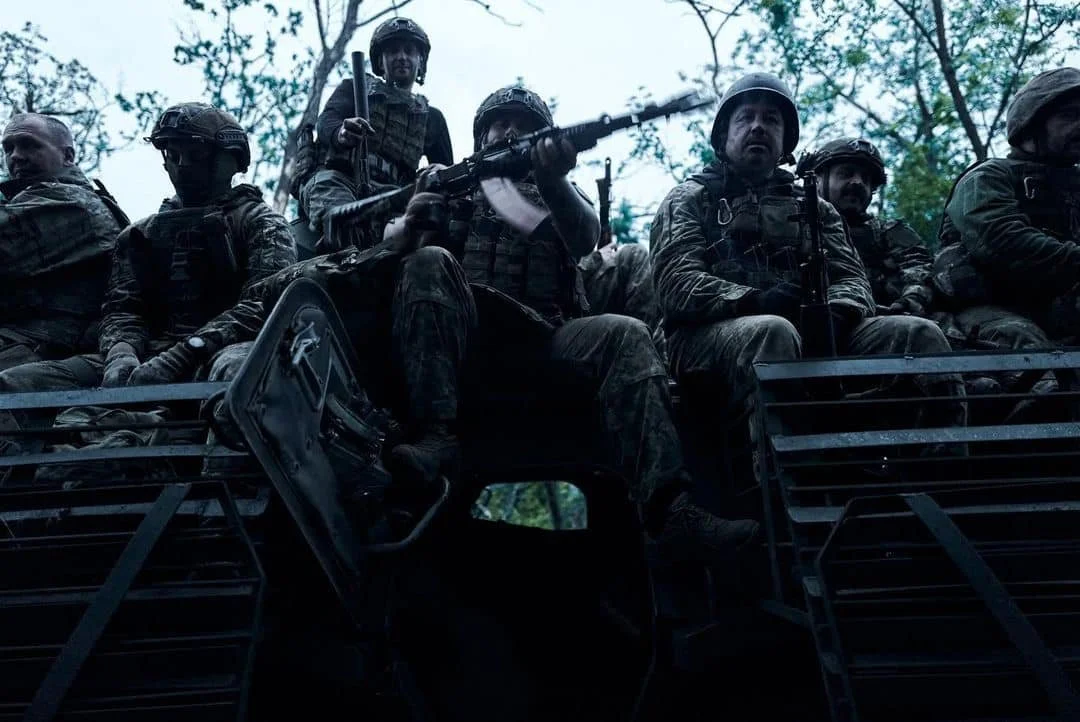
The Ukrainians are pressing the advantage with covert ops. With their motto, “I’m coming after you,” Ukrainian special forces have carried out covert attacks deep inside Russia, including a string of assassinations of Russian officials, particularly those involved in war crimes. Operation Spider Web successfully targeted military bases as far away as the Arctic Circle and eastern Siberia. Just two days before that operation, Ukrainian operatives launched an attack on an army base at Desantnaya Bay, near Vladivostok in the Russian Far East — the most distant target yet in the war. They furthermore have gone global. In a strike last July in Africa, covert operators killed 84 Russian Wagner fighters and 47 Malian soldiers.
The goal is to demonstrate to Russians that they are safe nowhere. Security analysts frequently compare the Ukrainian security services to Israel’s legendary Mossad.
In contrast to Russia, they never target innocent civilians. They understand that waging war against civilians is the recourse of cowards. Following the lessons of Clausewitz and Sun Tzu, they know that pursuing a victory lies not only in undermining the enemy’s military, but their political leadership as well.
When Putin’s time comes to leave the scene, if not by natural causes, it will be the power elite — the security services (siloviki) and oligarchs — who will do it. One would think that the humiliation of “Russia’s Pearl Harbor” would push them closer to do the deed. But then again it may take losing several hundred thousand more men in the meat grinder that is Ukraine.
I never heard my great uncle Augie’s stories about surviving Pearl Harbor and serving in World War II. He lived in West Texas and died many years ago. But I do know he won a lottery to send eleven survivors of the attack for a reunion in Hawaii not long before he passed away. Well deserved for a man who got to fight another day.
James Bruno (@JamesLBruno) served as a diplomat with the U.S. State Department for 23 years and is currently a member of the Diplomatic Readiness Reserve. An author and journalist, Bruno has been featured on CNN, NBC’s Today Show, Fox News, Sirius XM Radio, The Washington Post, Christian Science Monitor, Huffington Post, and other national and international media.
The opinions and characterizations in this article are those of the author, and do not necessarily represent official positions of the U.S. government.